Gemstone information

Information on the history and type of gemstones.

Garnet derived its name from the Latin word granatus, meaning like a grain Garnet occurs in every colour except blue and most varieties are named for their colour. Rhodolite is a purplish red, Pyrope garnets are purplish red, orangey red, crimson, or dark red. Spessartite garnets range from yellow and orange through red to reddish brown to dark black/brown.

Amethysts are featured in the British Crown Jewels and were also a favourite of Catherine the Great and Egyptian royalty. . Its purple colour made it a stone of royalty for many thousands of years. It must be purple to be amethyst, but it can display a range of shades including deep purple, light lilac, lavender and mauve.

Aquamarine is a member of the beryl family and ranges in colour from an almost colourless pale blue to blue-green or teal. According to some legends, it is the treasure of mermaids, with the power to keep sailors safe at sea. The most prized colour is a deep-blue aqua, it gets its name from Latin words meaning water and sea.

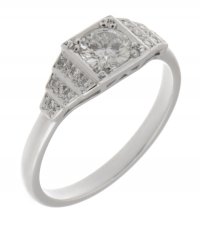
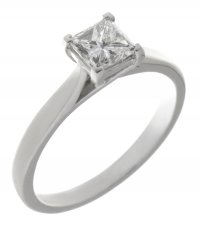
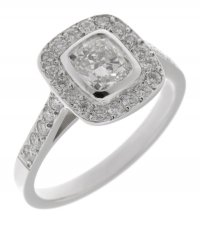
Diamonds are the hardest substance known to humankind, and is made of a crystallized carbon that has unique powers of light reflection. Since ancient Greece, diamonds and diamond jewellery have been the traditional symbol of love, and the ancients believed they were hardened dew drops, splinters from the stars or crystallized lightning. Today, the gem-grade diamonds are used to make fine jewellery and engagement rings.

Emeralds have been cherished for as long as there has been a written history. Archaeologists have traced the origins of the use of emerald to almost 3000 B.C. in both ancient Egypt and India. Cleopatra prized her emeralds more than any other gem, the Romans also loved emeralds.Emeralds are found in many countries, but Columbia and Brazil are the major producers and Columbia is recognized as the source for the finest stones. They are also found in Pakistan, Russia, Australia, South Africa, India, Norway, and the United States. Because emeralds usually contain many cracks, fissures, and inclusions, the majority of these stones are "oiled". This means that they are immersed in oil which reduces the visibility of the inclusions, and also improves the clarity. Oiling is almost universal and because it is so common today, it is not considered necessary to disclose this fact Emeralds are brittle stones and care should be taken when wearing or cleaning them. They should never be immersed in an ultrasonic or subjected to steam cleaning.

Pearls and their sparkling beauty have attracted the attention of many brides, in ancient Greece people believed that using pearls can promote marital bliss and prevent newlywed women from crying. During the Crusades in the Middle Ages, pearls were the gift of choice for a knight to give to his lady. During the 14th and 15th centuries, royal wedding scenes closely resembled a sea of pearls, with everyone from the bride down to her male guests adorned with impressive arrays of pearl jewellery. An organic gem, pearls are formed inside mollusks such as oysters and mussels. They are formed when an irritant such as a tiny stone or bit of sand gets inside the mollusk's shell. This process of building a solid pearl can take up to seven or eight years. The most valuable pearls are perfectly symmetrical, relatively large and naturally produced. They have a shimmering iridescence which is called orient luster. natural pearls (made without human interference), cultured pearls (made when a foreign substance is intentionally inserted into a living oyster. This method was first used in 1893), freshwater pearls (pearls which form in fresh water mollusks and resemble puffed rice), black pearls (grey to black pearls), seed pearls (small, tiny pearls used in Victorian jewellery and sewn on clothing).

Ruby's day is Tuesday, its season summer, and is said to accord wearers wisdom, happiness and health, and to bring particularly good luck to gamblers and lovers. Rubies - especially fine rubies - are rarer than diamonds, emeralds or sapphires and are harder than any other material except diamonds but though exceedingly hard, stones may crack or chip when hit. Of course, colour is everything with rubies. How much red can you afford? The richer, deeper, better the red, the more expensive and rarer the ruby.

Peridot comes from Arizona, Burma, Norway, islands in the Red Sea, Hawaii and is sometimes found in meteorites. It's been mined as a gemstone for thousands of years, and is mentioned in the Bible under the name of Chrysolite. Legend says that peridot was one of the favorite gemstones of Cleopatra and that some of the "emeralds" worn by her were actually peridot.

Sapphire - gem of the heavens, or the divine gemstone, has been cherished for thousands of years. The ancient Persians believed that the earth rested on a giant sapphire and its reflection coloured the sky. Sapphire blue is by far the most popular colour, but they can be almost any colour, including yellow, green, white, colourless, pink, orange, brown, and purple. Sapphire symbolizes sincerity and faithfulness, and is an excellent choice for an engagement ring. When Prince Charles gave Princess Diana a sapphire engagement ring, couples all over the world were inspired to revive this ancient tradition.

Opal's name evolved from the Roman word opalus from the Greek word opallios - "to see a change of colour." The Greek word was a modification of the ancient Indian Sanskrit name for opal, upala, which meant "precious stone. The early Greeks thought that opals gave their owners the powers of foresight and prophecy. The Romans adored it as a token of hope and purity. Opal is brittle, heat sensitive, and breaks and scratches easily. Some varieties self destruct through the loss of water. Even with these drawbacks, opal still is a premier gemstone.

Citrine is a variety of quartz ranging in colours of yellow, yellow-brown, orange, dark orange-brown, reddish-brown. In ancient times, citrine was carried as a protection against snake venom and evil thoughts. Citrine is one of the most affordable gemstones, thanks to the durability and availability of this golden quartz. Named from the French name for lemon, "citron," many citrines have a juicy lemon colour.

Topaz occurs in a wide range of colours including red, orange, peach, pink, gold, yellow, brown and clear and is found in Brazil, Sri Lanka, Pakistan and Russia. Naturally pale to medium blue topaz is enhanced by irradiation to produce a more intense blue colour, from sky blue topaz, London blue topaz and Swiss blue topaz. Red and pink topaz gems were used in the jewellery of the 18th and 19th Century Russian Czarinas and is why topaz is sometimes called "Imperial Topaz".